SEO Fundamentals: Search, Findability, and AI
Learn how helpful content, clear structure, metadata, schema, media, and AI-aware findability work together in modern search.
SEO Is Findability, Not Magic
SEO can sound like a bag of tricks: keywords, rankings, snippets, schema, algorithms, AI Overviews, and whatever the internet is arguing about this week. That noise makes beginners feel as if search is something mysterious that happens after a website is built.
A healthier way to think about SEO is findability. Can the right people find the right page, understand what it offers, and trust it enough to continue? Can search systems crawl it, interpret it, and show it in useful ways?
This lesson focuses on the fundamentals that still matter in modern search, including AI-shaped search experiences: helpful content, clear structure, metadata, links, images, page experience, and structured data that matches what users can actually see.
- When you search for a local business, tutorial, recipe, or product, what makes you trust one result over another?
- Have you ever opened a search result that technically matched your query but did not actually help?
- What should AI search make easier for users, and what could it make harder for website owners?
This lesson follows validation and pre-launch QA because search visibility depends on the same foundations: clear structure, working pages, useful content, accessibility, performance, and trust.
Learning Objectives
By the end of this lesson, you'll be able to:
- Explain Explain SEO as findability rather than ranking tricks
- Identify Identify the technical and content layers that support search visibility
- Write useful title tags, meta descriptions, headings, image alt text, and internal links
- Understand Understand how structured data helps search systems interpret a page
- Describe Describe how AI search affects content quality, specificity, media, and measurement
Why This Matters:
SEO is not a separate afterthought. It is part of designing a page so people and search systems can understand what the page is for, why it is useful, and when it should be shown.
Before You Start:
You should be familiar with:
- Test and Validate Your Site Review here
- HTML Document Structure Review here
- Working with Images Review here
What SEO Actually Is
Search engine optimization is the practice of helping search systems discover, understand, and present useful pages. That does not mean writing for robots instead of people. A search-friendly page should also be a reader-friendly page: clear, specific, accessible, trustworthy, and easy to use.
Google's current Search guidance continues to emphasize helpful, reliable, people-first content. That matters even more now that search includes classic results, rich results, image and video surfaces, AI Overviews, AI Mode, and follow-up style queries.
Important: SEO can help search systems better discover and understand good content. It cannot rescue a page that has no clear purpose, no useful answer, or no reason for a reader to trust it.
The Layers of Search Visibility
Search visibility is not one setting. It is a stack of decisions. If the page is blocked from crawling, the best title tag in the world will not help. If the page is crawlable but thin, confusing, or unpleasant to use, metadata alone will not make it satisfying.
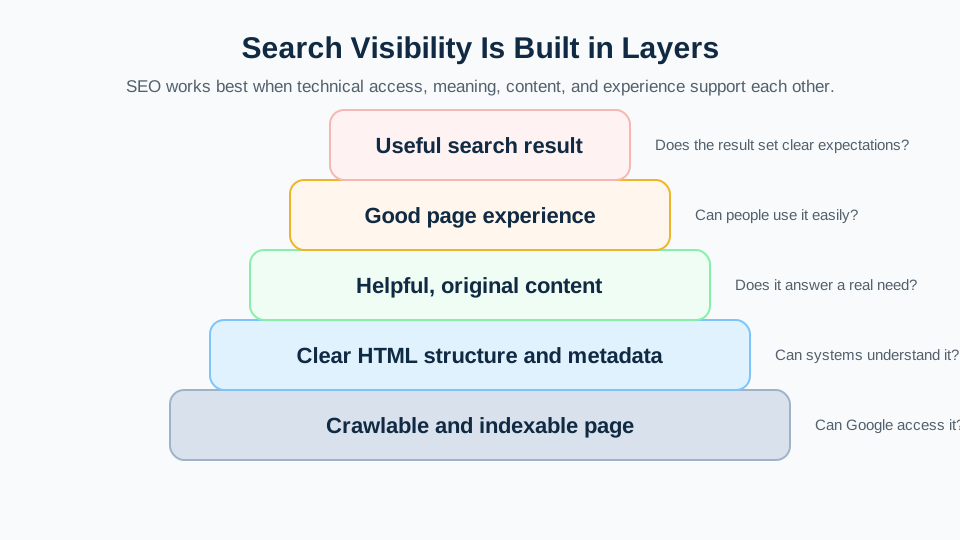
For most beginner and small-business sites, the practical checklist is simple:
- the page loads successfully and is not accidentally hidden from search
- the title, headings, and opening content describe the page clearly
- the content answers a real user need with enough detail to be useful
- images, links, and navigation support the page purpose
- the page works well on mobile and is not cluttered or slow
Start with Search Intent
Search intent means the reason behind a search. Someone searching black swan bistro menu probably wants dishes, prices, dietary options, opening hours, or booking information. Someone searching how to add schema to a website wants an explanation and steps.
Good SEO starts by matching the page to a need. Before writing metadata or adding schema, ask:
- Who is this page for?
- What question, decision, or task should it help with?
- What would make the page more useful than a generic answer?
- What should the person do next after reading?
The Anatomy of an SEO-Friendly Page
On-page SEO is mostly visible. Search systems use page titles and metadata, but they also rely on the actual content: headings, body text, links, images, captions, lists, examples, and structured relationships.
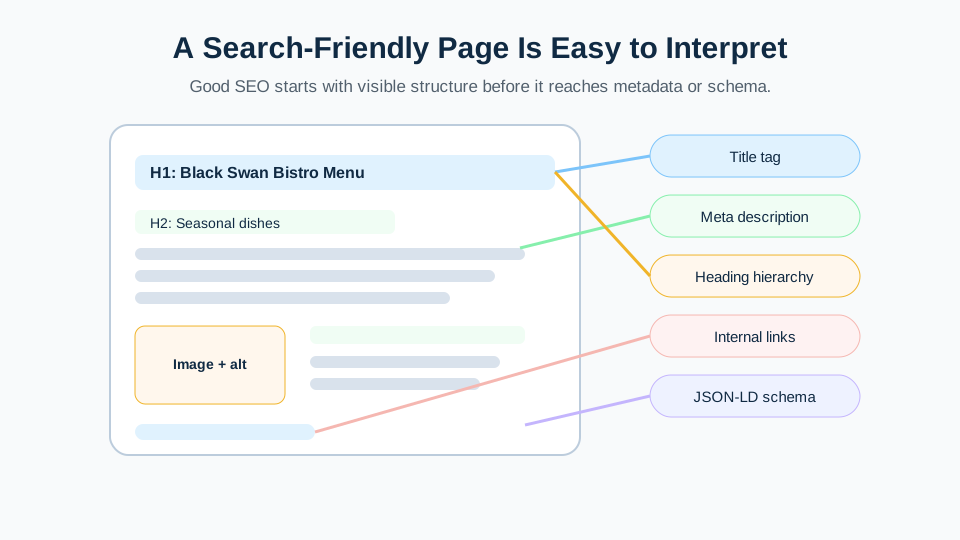
Common on-page SEO elements
- Title tag: the concise title used by browsers and often search results
- Meta description: a short summary that can help shape snippets
- H1: the visible main heading that describes the page topic
- Section headings: a scannable outline of the page
- Internal links: pathways to related pages and next steps
- Image alt text: text alternatives and image meaning when relevant
- Structured data: machine-readable labels for specific page types
Title Tags and Meta Descriptions
A title tag should describe the page specifically. It should usually include the page topic and, when useful, the brand or site name. A meta description should explain what the page offers in plain language. Search engines may rewrite visible snippets, but good metadata still helps define the page.
<title>Black Swan Bistro Menu | Seasonal Dining in Fremantle</title>
<meta
  name="description"
  content="Explore Black Swan Bistro's seasonal menu, dietary options, and booking details before your visit."
>
Avoid stuffing the same phrase repeatedly. Repetition can make a result look less trustworthy, and it often makes the page worse for humans too.
Structured Data and Schema
Structured data is code that gives search systems explicit clues about the meaning of a page. For example, it can label a page as an article, local business, recipe, event, FAQ, product, or breadcrumb trail, depending on what is actually present.
For many sites, JSON-LD is the easiest format to maintain. The important rule is that structured data should describe visible page content. Do not add schema for information that users cannot find on the page.
<script type="application/ld+json">
{
  "@context": "https://schema.org",
  "@type": "Restaurant",
  "name": "Black Swan Bistro",
  "servesCuisine": "Modern Australian",
  "url": "https://example.com",
  "menu": "https://example.com/menu"
}
</script>
Schema is not a shortcut: valid structured data can make a page eligible for richer search features, but it does not guarantee a special result and it should never contradict the visible page.
AI Search, Searchability, and Findability
AI search experiences change how people ask questions. Queries are often longer, more specific, more conversational, and sometimes multimodal. A person might ask for a comparison, upload an image, continue with a follow-up question, or expect a direct explanation with links to useful sources.
This does not mean you need a separate trick called AI SEO. Current Google guidance says the same SEO foundations remain relevant for AI features. What changes is the pressure on quality: vague, copied, generic, or mass-produced content is easier to ignore when users can ask more precise questions.
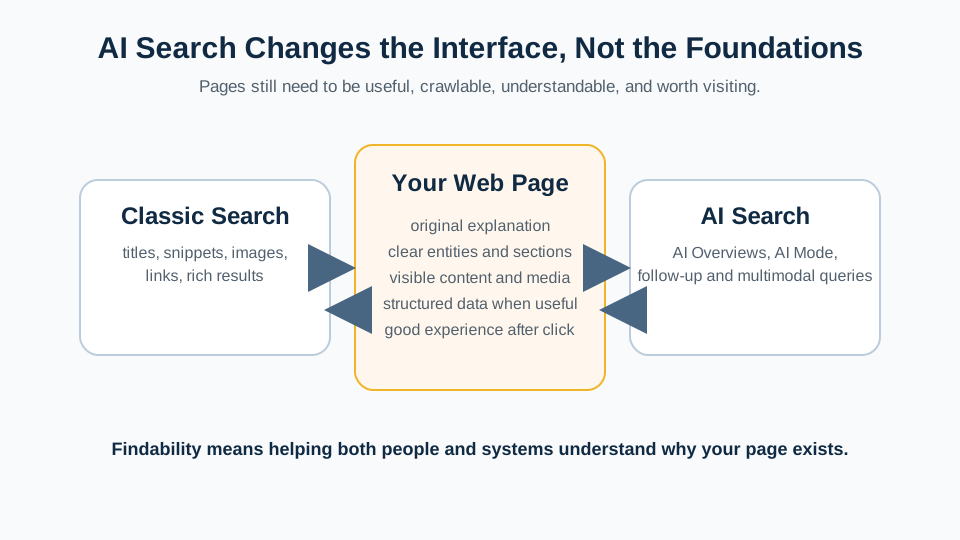
To make pages more findable in an AI-shaped search landscape:
- answer real, specific questions instead of writing broad filler
- show first-hand knowledge, examples, process, evidence, or local context
- use headings that make the page easy to scan and cite
- include useful images or video when the topic benefits from visual evidence
- keep business details, author information, dates, and page purpose clear
- review AI-assisted content carefully so it is accurate, original, and useful
Using AI responsibly: AI can help brainstorm questions, draft outlines, summarize research, or check clarity. It should not invent expertise, copy other sources, publish unchecked facts, or create lots of shallow pages just to chase search traffic.
Images, Video, and Multimodal Search
Modern search is not only text. Images, videos, maps, product data, business profiles, and visual search all affect how people find and evaluate information. For a website owner, this means media should be useful, not decorative filler.
Use descriptive filenames where practical, compress images properly, include meaningful alt text, and place images near the content they support. If the image shows a product, place, diagram, process, or result, make that meaning visible in the surrounding text too.
Measure and Improve
SEO is not finished when the page is published. Use Search Console to check whether Google can find and index the page, what queries surface it, and whether structured data has validation issues. Use analytics to understand whether visitors actually do something useful after they arrive.
In an AI search landscape, clicks may not tell the whole story. Some visits may be more informed because the search experience gave users more context before they arrived. Track meaningful outcomes such as enquiries, bookings, signups, time on useful pages, or successful information lookups, not only raw traffic.
Checkpoint: Can You Spot Search-Friendly Thinking?
Before moving forward, can you answer these?
- Why is SEO better understood as findability rather than ranking tricks?
- What should be true before structured data is added to a page?
- How does AI search change SEO priorities?
Check Your Answers
- Findability keeps the focus on helping the right person reach the right page for the right reason. Ranking tricks often lead to shallow content, confusing structure, or decisions made for algorithms instead of users.
- The information in the structured data should also be visible and accurate on the page. Structured data should clarify real content, not invent information that users cannot see.
- AI search increases the value of clear, original, well-structured content that can answer more specific questions. It does not remove the need for crawlable pages, useful headings, trustworthy content, media, metadata, and good page experience.
How confident are you with this concept?
Still confused | Getting there | Got it | Could explain it to a friend
Guided Practice: Improve One Page for Findability
Step 1: Choose one page and one search need
Choose a page from a project you have built, such as the Black Swan Bistro homepage, menu page, or contact page. Write the main search need in one sentence.
Example: A local customer wants to find the restaurant menu before deciding whether to book.
Need a hint?
Step 2: Audit the visible structure
Check the page title, H1, H2 headings, opening paragraph, image alt text, and internal links. Ask whether a person can understand the page purpose in the first few seconds.
Record one improvement that would make the page clearer.
Need a hint?
Step 3: Write a title tag and meta description
Draft a title tag and meta description that set clear expectations. Keep the title specific and the description useful.
Title: Black Swan Bistro Menu | Seasonal Dining in Fremantle
Description: Explore Black Swan Bistro's seasonal menu, dietary options, and booking details before your visit.
Need a hint?
Step 4: Add one AI-era findability improvement
Improve the page so it answers a more specific user question. Add a short FAQ, a comparison table, a clear summary, or a descriptive image with useful alt text.
The aim is to make the page easier for both people and search systems to understand.
Need a hint?
You're on track if you can:
- You defined a real search need before editing the page
- You checked visible structure before metadata or schema
- You wrote metadata that accurately describes the page
- You added one improvement that helps specific user questions
Independent Practice: SEO and AI Findability Audit
Now try this on your own without hints!
Your Task:
Choose one page from your own project. Create a short SEO audit that explains the page purpose, the likely search need, the visible structure, the metadata, image/media support, internal links, and one AI-era findability improvement.
Requirements:
- Name the primary user and search need
- Review the title tag, meta description, H1, H2 headings, and opening content
- Check image alt text and at least one internal link
- Decide whether structured data would genuinely describe visible content
- Add one improvement that helps a specific question, comparison, local detail, example, or next step
Success Criteria:
| Criteria | You've succeeded if... |
|---|---|
| User intent | The learner can explain who the page is for and what question or task it helps with. |
| Page structure | The page has a clear title, H1, section headings, useful body content, and meaningful internal links. |
| Modern findability | The page includes original explanation, specific answers, media or examples where useful, and no AI-generated filler. |
| Technical clarity | Metadata, images, and any structured data match the visible page content and can be validated. |
Recap
SEO is not a trick layer added after the site is done. It is the combined effect of clear purpose, useful content, accessible structure, technical availability, metadata, media, links, page experience, and honest signals of trust.
AI search does not make those foundations obsolete. It makes weak pages easier to outgrow and strong pages more valuable: specific answers, real examples, visible expertise, clear structure, useful media, and content that deserves to be found.
Build Pages Worth Finding
Key Takeaways:
- SEO is the practice of making useful pages easier to find, understand, and trust.
- Technical access matters first: search systems need crawlable, indexable pages that return a successful response.
- On-page SEO starts with visible structure: titles, headings, body content, links, images, and page purpose.
- Structured data helps search systems interpret content, but it must match what users can see.
- AI search makes original, specific, well-structured content more important, not less important.
- AI can help with research and drafting, but it should not replace expertise, evidence, or human review.
Think & Reflect:
Findability
- Which page on your site has the clearest purpose right now?
- Which page would be hardest for a search engine or AI assistant to understand, and why?
People First
- Where could your page show more first-hand knowledge, clearer examples, or better sourcing?
- What would you remove if it only exists for search engines and not for readers?
Recommended Next Steps
Continue Learning
Ready to move forward? Continue with the next tutorial in this series:
Accessibility EssentialsAdditional Resources
Deepen your understanding with these helpful resources:
- Google Search Central: Creating helpful, reliable, people-first content - Guidance on writing useful content for people first.
- Google Search Central: AI features and your website - How AI features in Search relate to website owners and publishers.
- Google Search Central: Performing well in AI experiences on Search - Current Google guidance on succeeding in AI-shaped search experiences.
- Google Search Central: Introduction to structured data - How structured data helps Google understand eligible page content.